Fabrication Insights
Important Factors in Custom Metal Fabrication
Published by Ahmad Steel Works Workshop Team
• 6 Min Read
• Sialkot, Pakistan
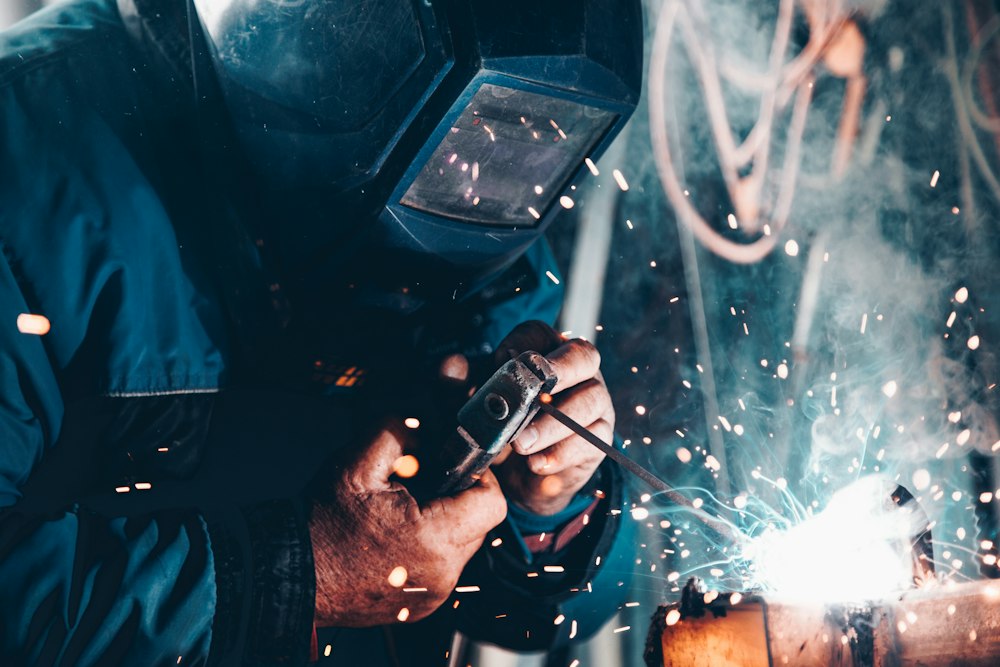
Commissioning custom metalwork for your property — whether an entrance gate, window safety grills, structural shed trusses, or door chowkhats — represents a long-term investment. Unlike mass-manufactured hardware, custom steel fabrication quality depends entirely on material honesty, technical precision, and welding integrity.
In the steel industry, sheet and pipe wall thickness is measured in Birmingham Wire Gauge (BWG) or Standard Wire Gauge (SWG).
Crucial Rule: The lower the gauge number, the thicker and heavier the steel:
"Always request your fabricator to show the micrometer or screw gauge measurement of the raw steel pipes before fabrication begins. At Ahmad Steel Works in Chhabilpur, we encourage clients to verify raw materials upon delivery."
A steel structure is only as strong as its weakest weld. Look for:
High-quality fabrication requires square 45-degree miter cuts at all 90-degree frame corners. Butt joints with open pipe ends allow rainwater to enter the hollow interior, causing unseen internal rusting. Closed miter joints seal the pipe interior from atmospheric moisture.
Metal structures interact directly with brickwork, concrete, and foundation footings. Anchor bolts, holdfasts, and base plates must be hot-dip galvanized or heavily primed to prevent galvanic corrosion where steel contacts cement alkalinity and groundwater dampness.
Contact Ahmad Steel Works in Chhabilpur for verified gauge steel, precision welding, and guaranteed workmanship.